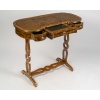
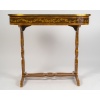
André-Louis Gilbert (1746–1809) – Table écritoire à marqueterie de chasse, vers 1775
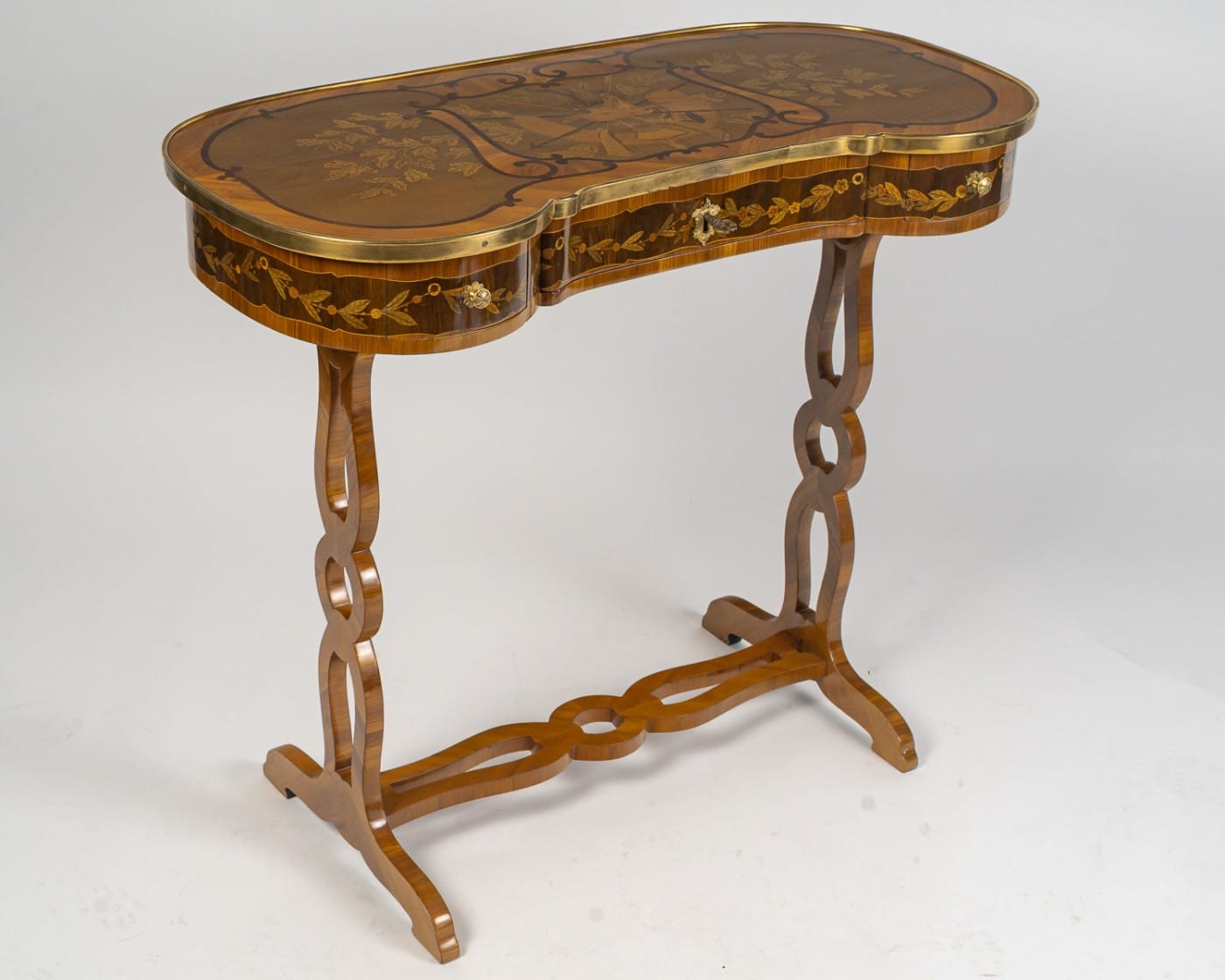
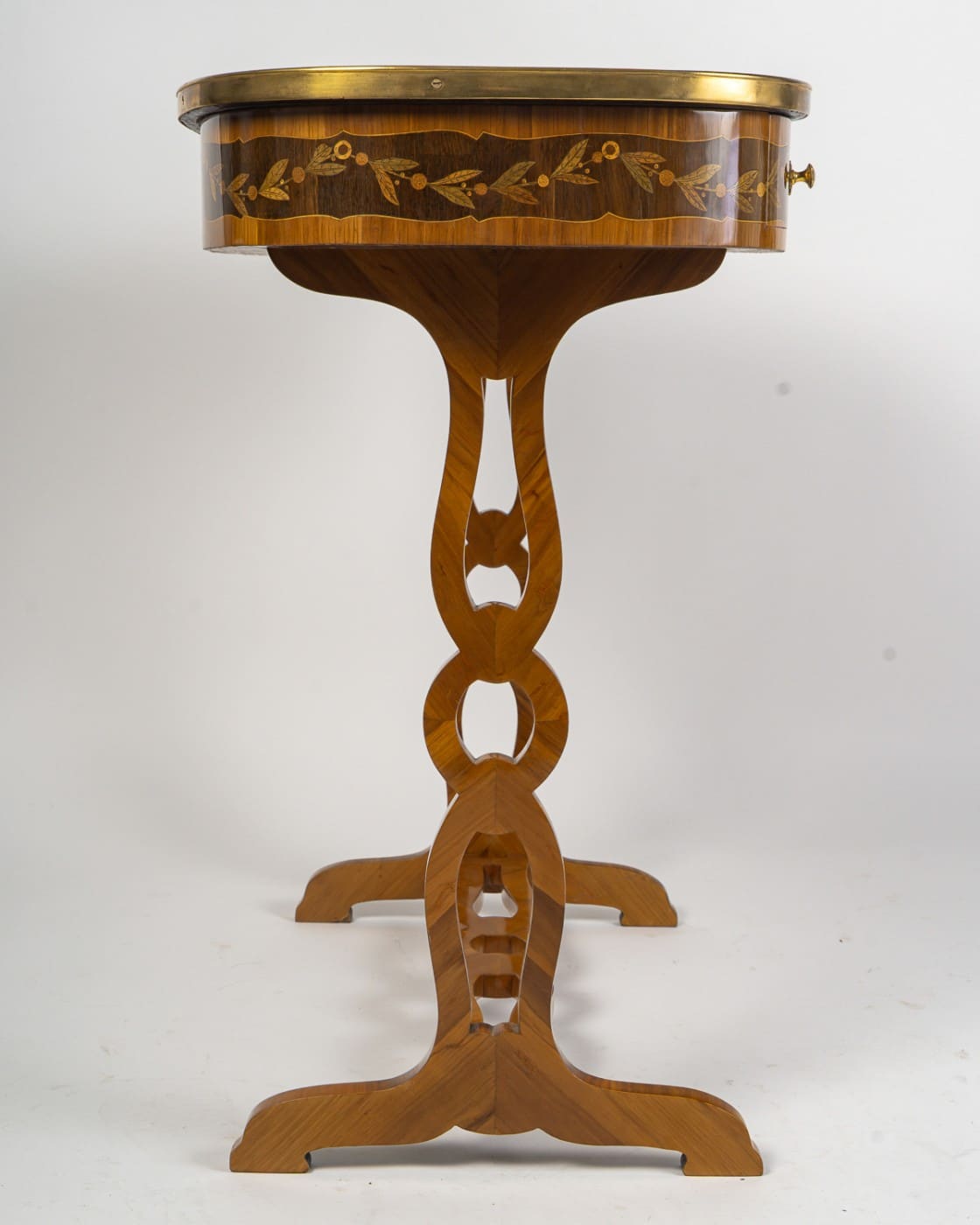
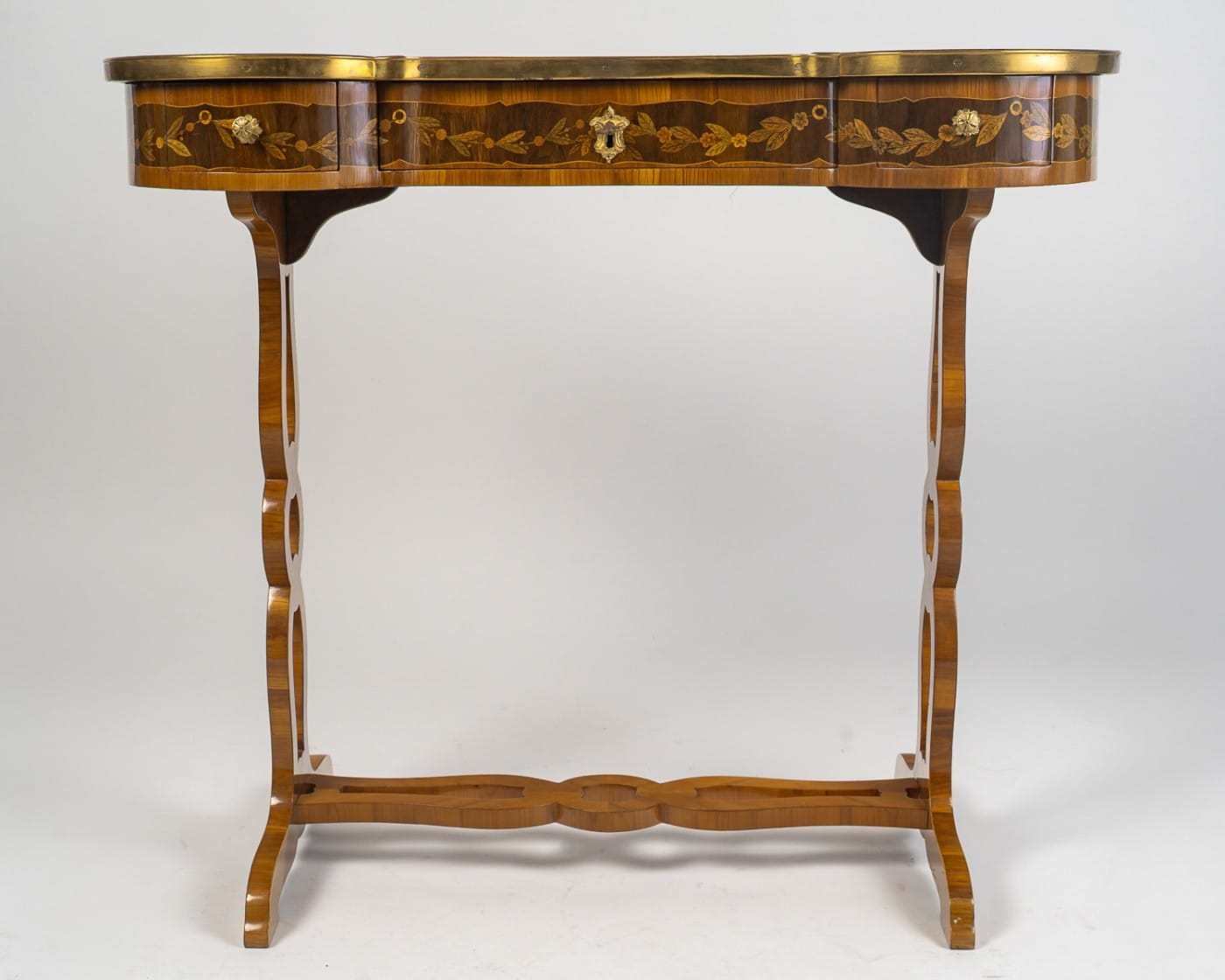
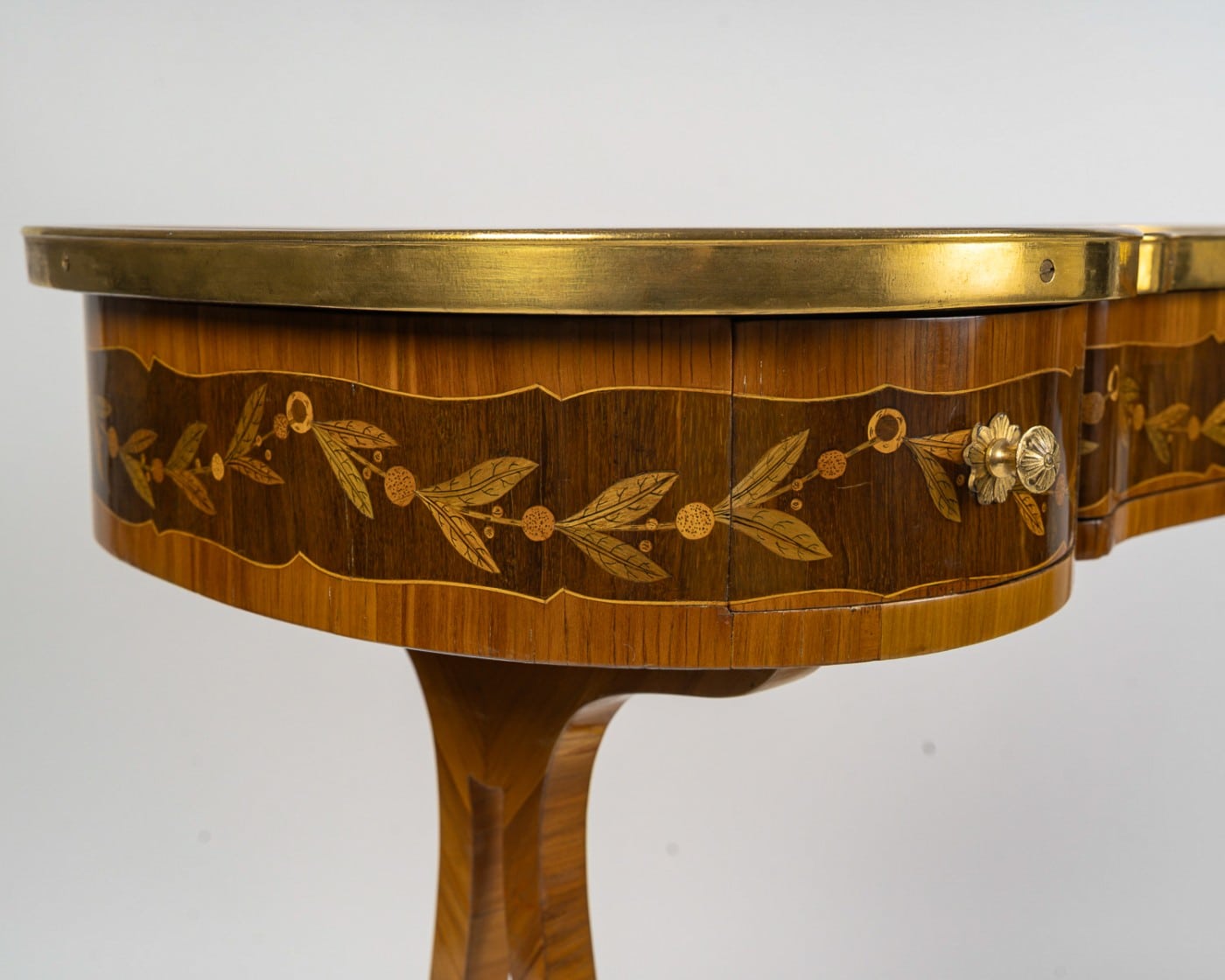
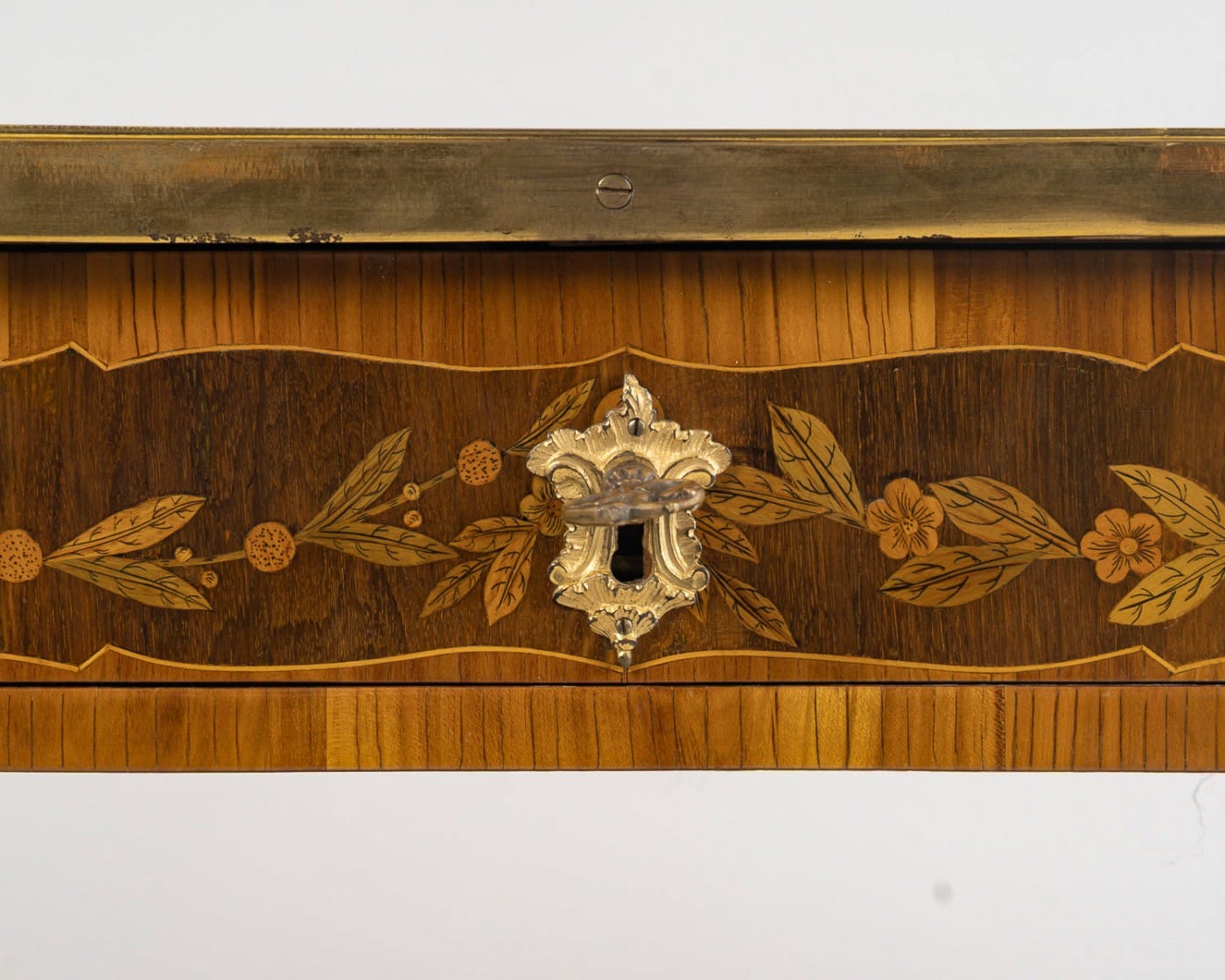
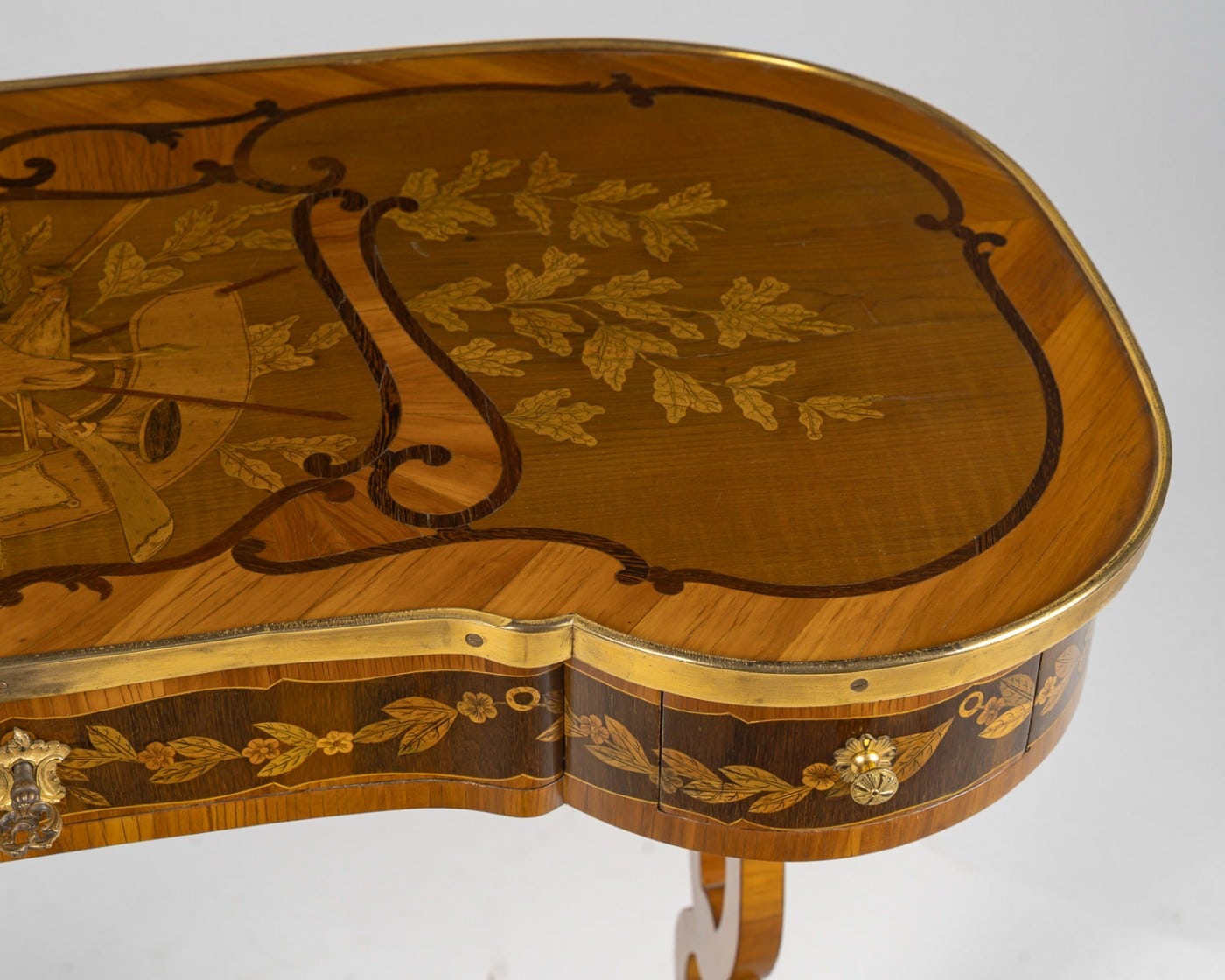
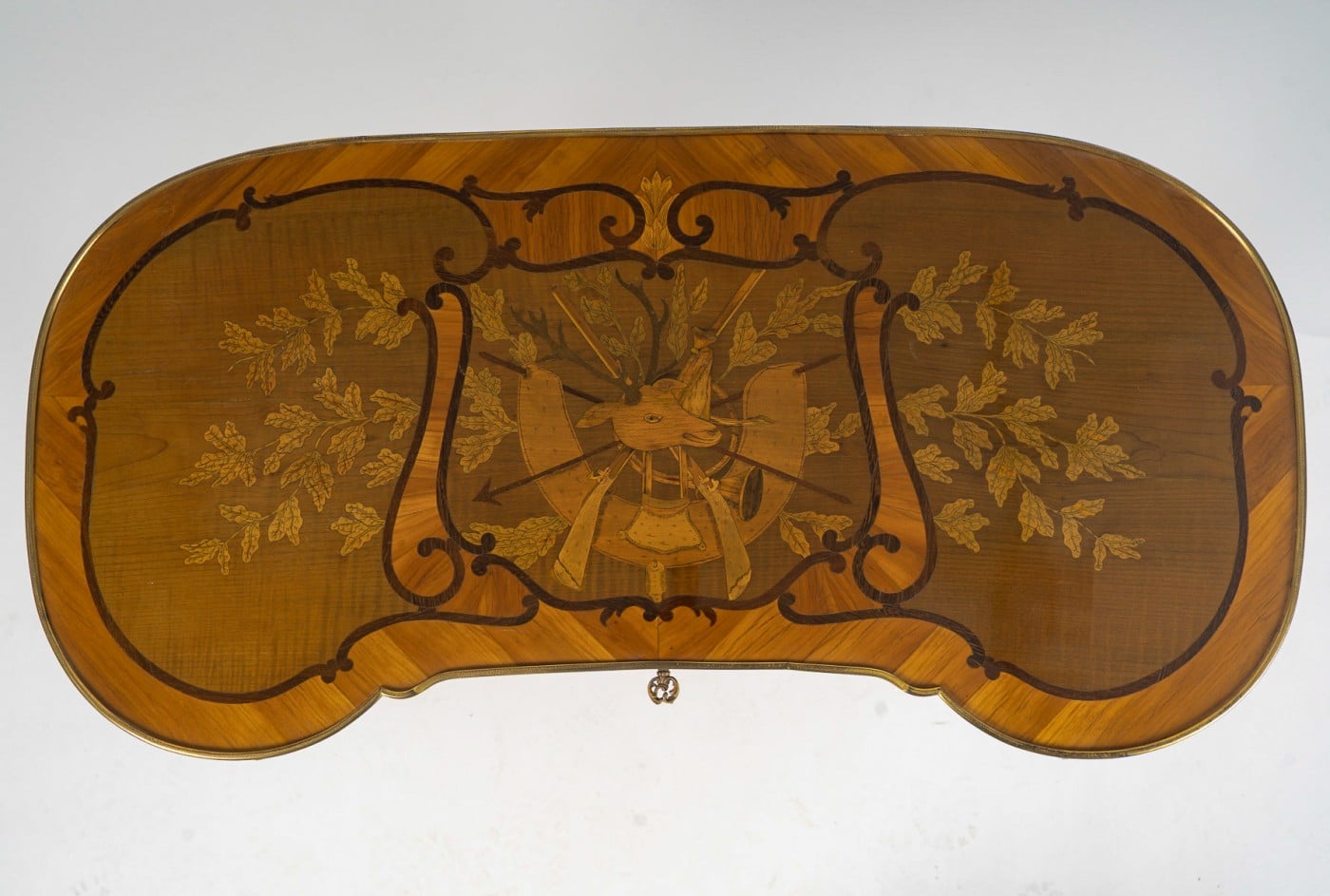
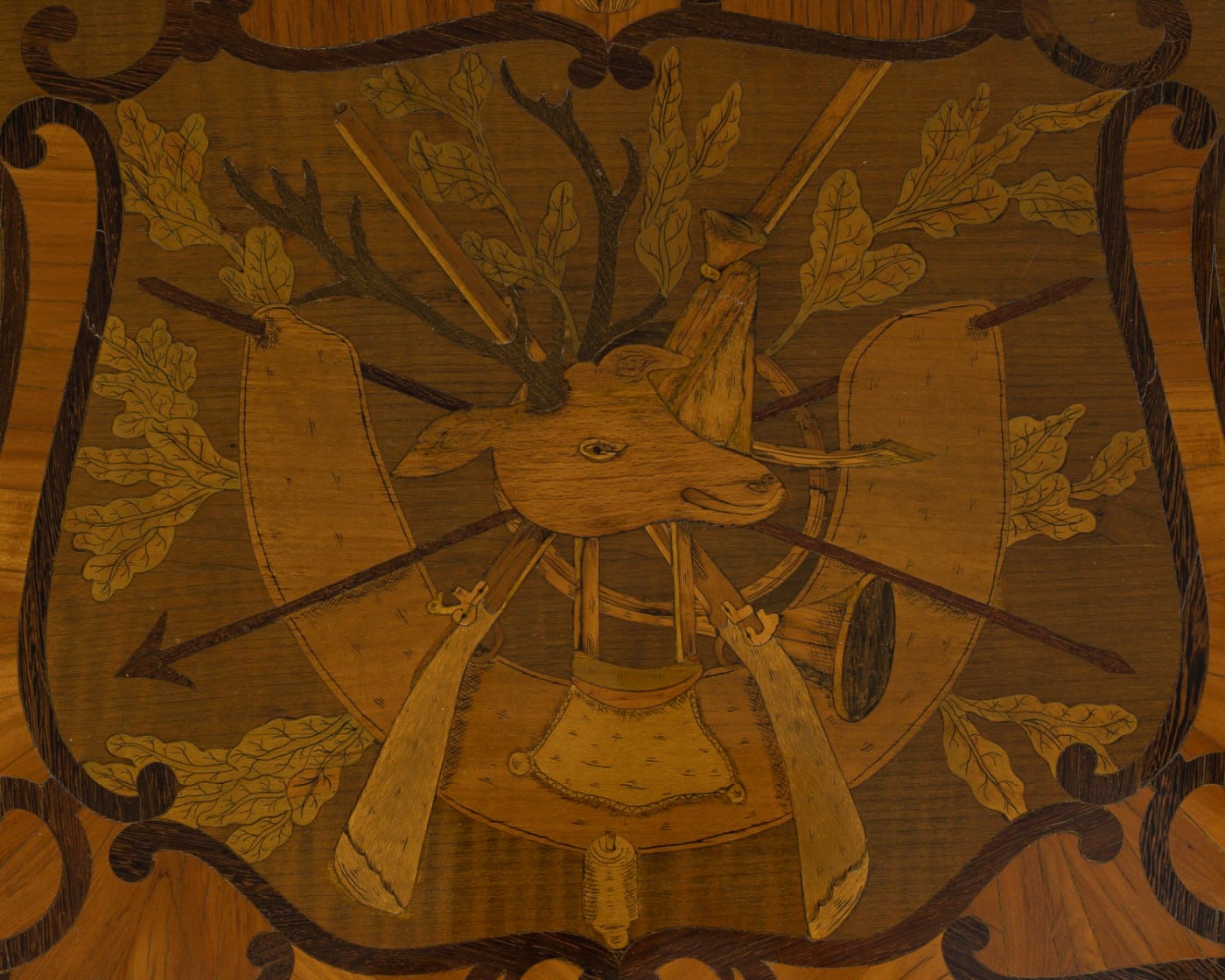
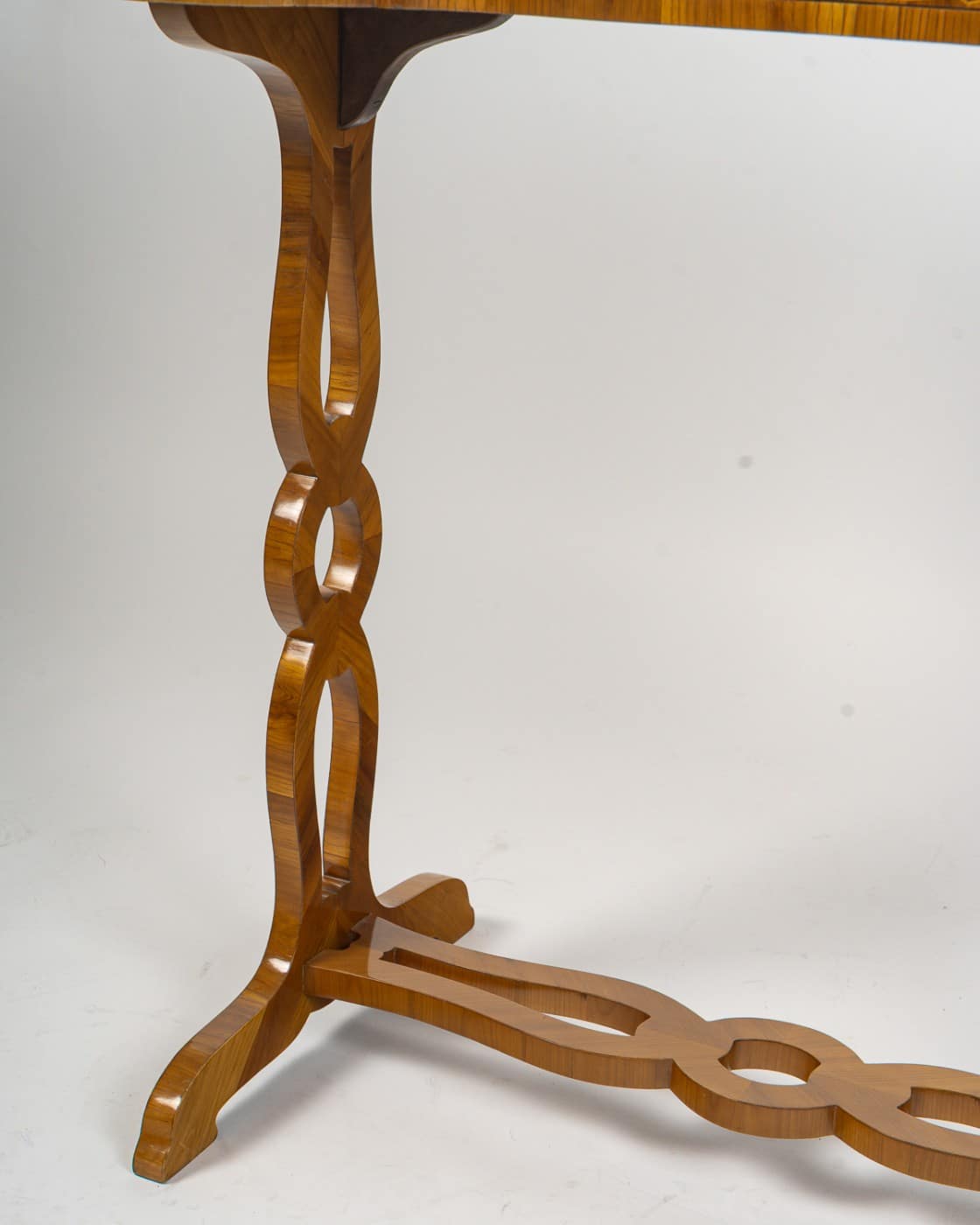
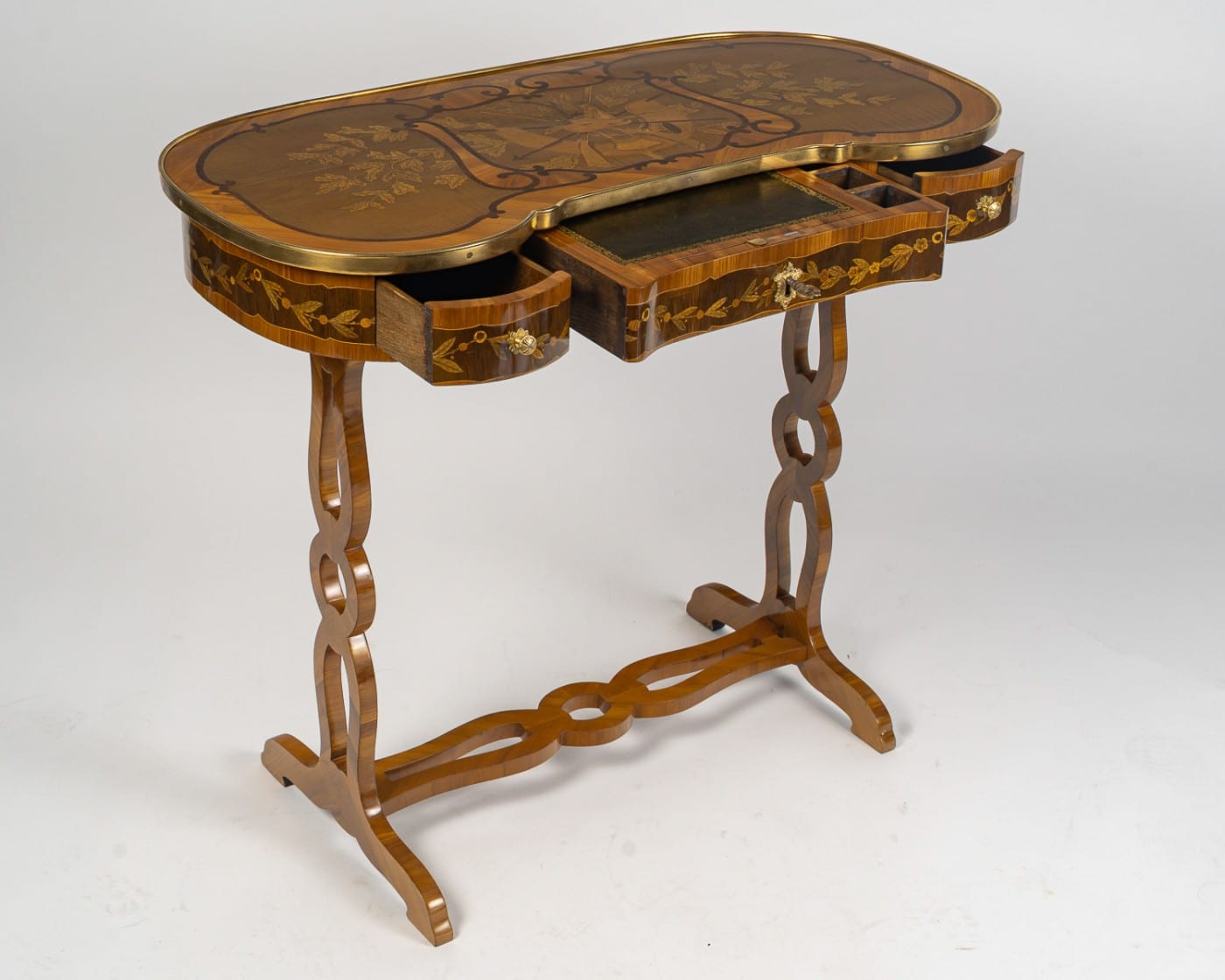
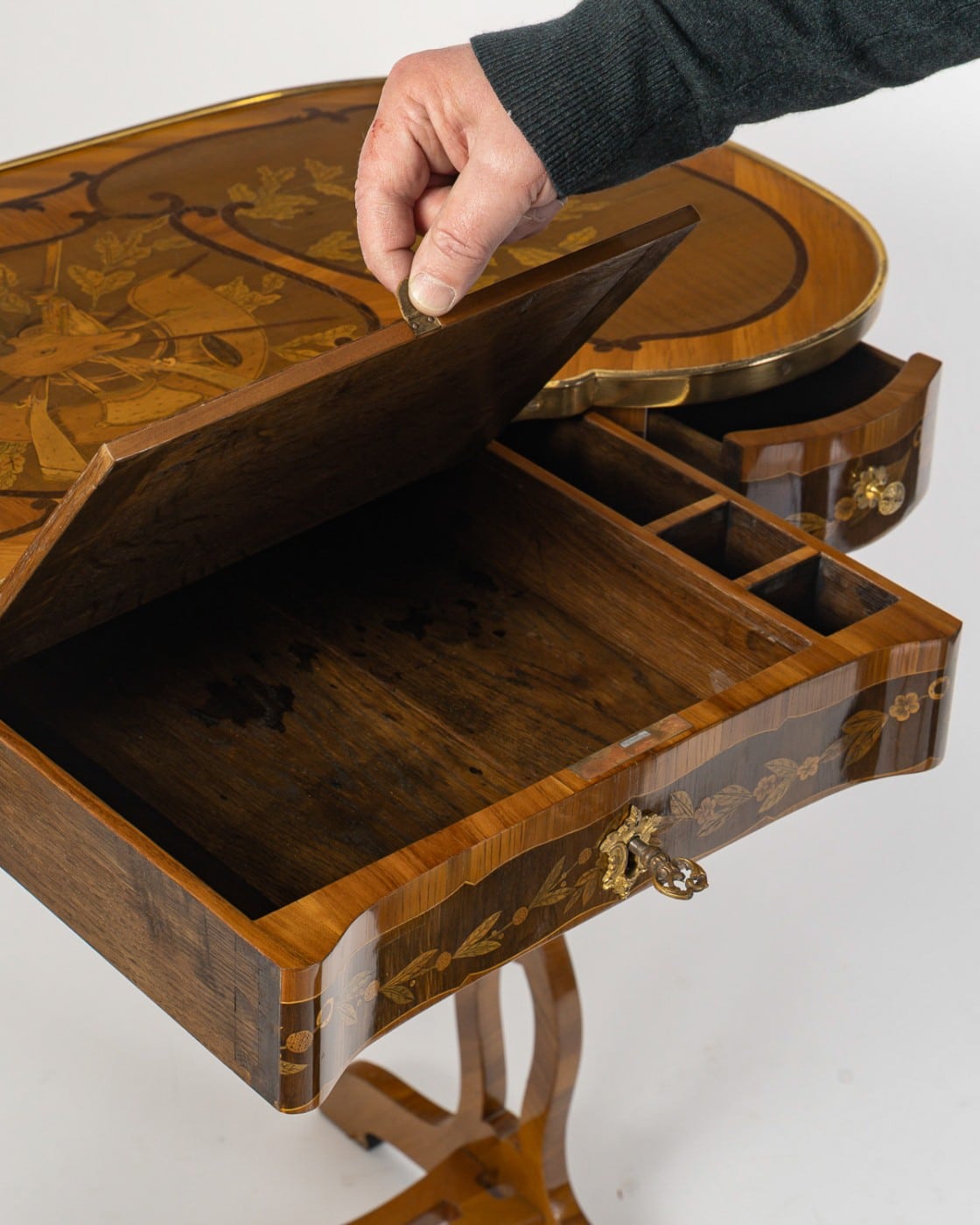
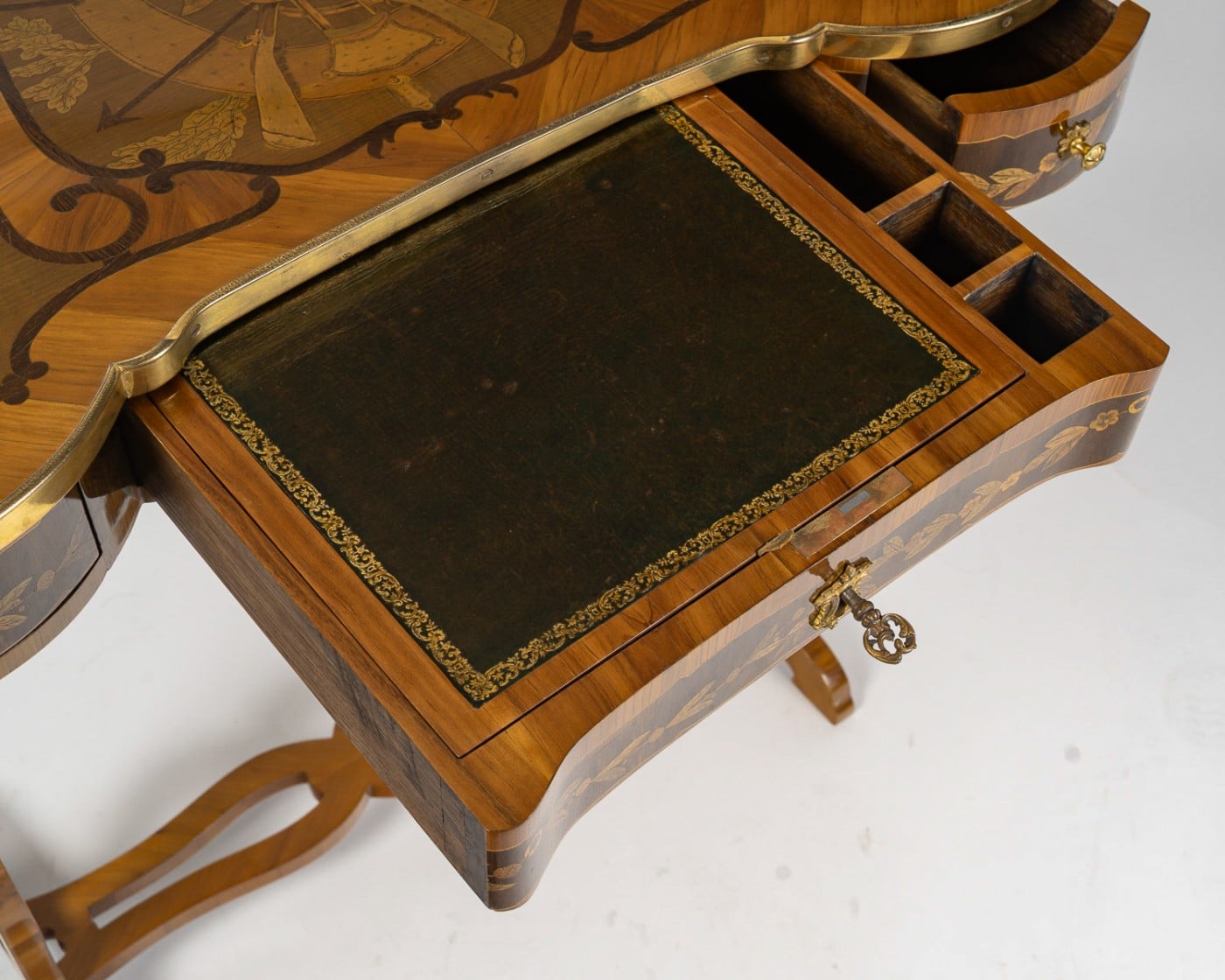
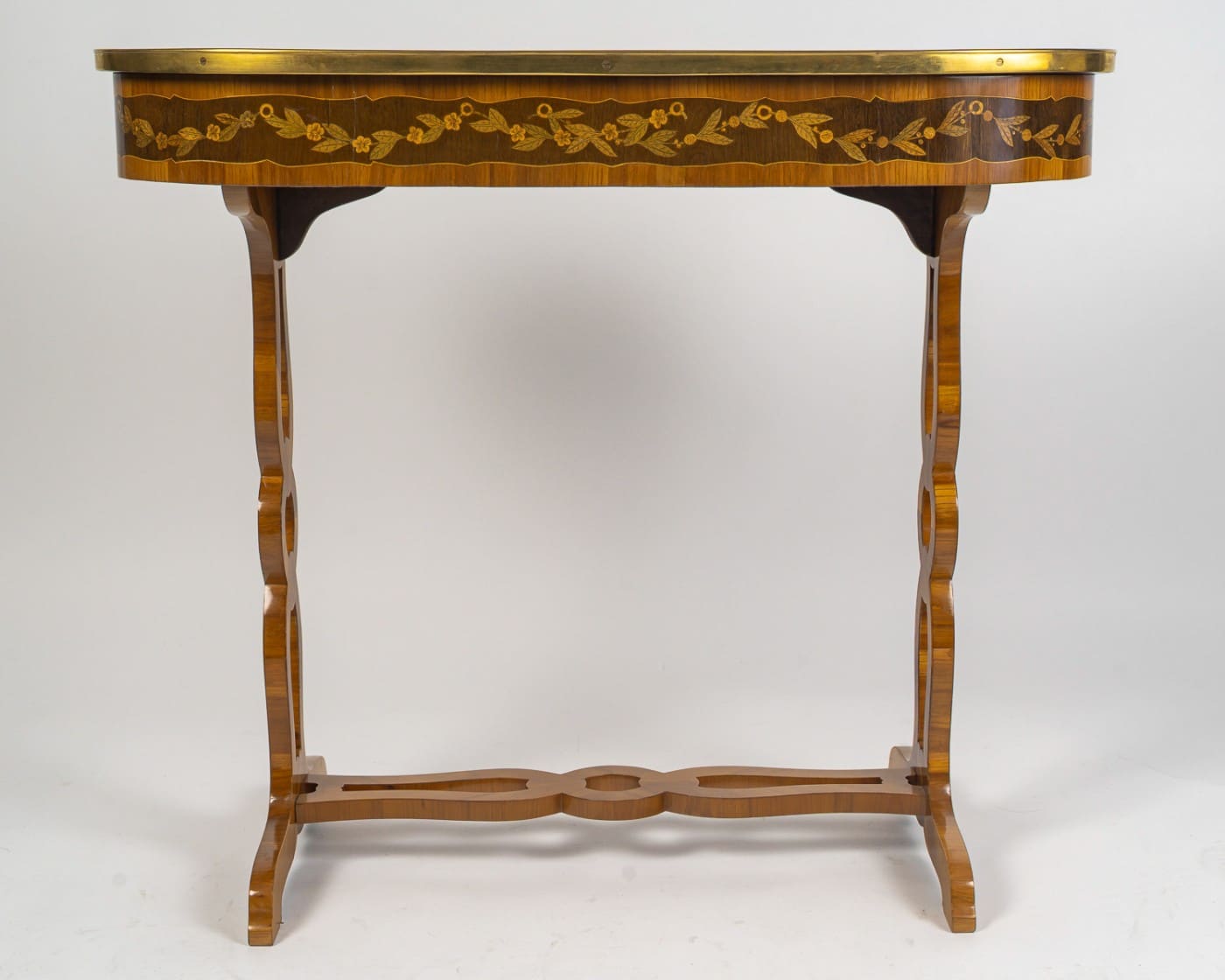
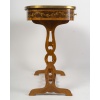
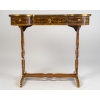
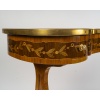
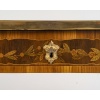
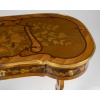
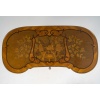
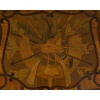
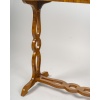
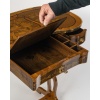
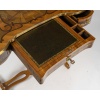
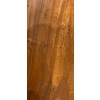
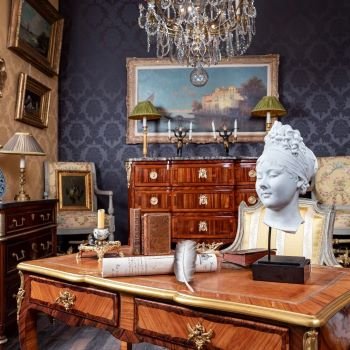
Une table écritoire d’exception, de forme haricot, dont le plateau ceint d’une lingotière en bronze doré offre un décor de trophées de chasse en marqueterie de bois précieux : merisier, filets d’amarante, buis teinté sur fond de sycomore. La ceinture, ornée d’une guirlande feuillagée en buis et sycomore teintés sur fond d’amarante, s’ouvre par trois tiroirs en façade, dont l’un forme un écritoire garni d’un cuir au fer doré. L’ensemble repose sur des montants ajourés, terminés par des pieds en accolade et réunis par une barre d’entrejambe. Les bronzes dorés, d’une grande finesse, achèvent ce meuble de caractère.
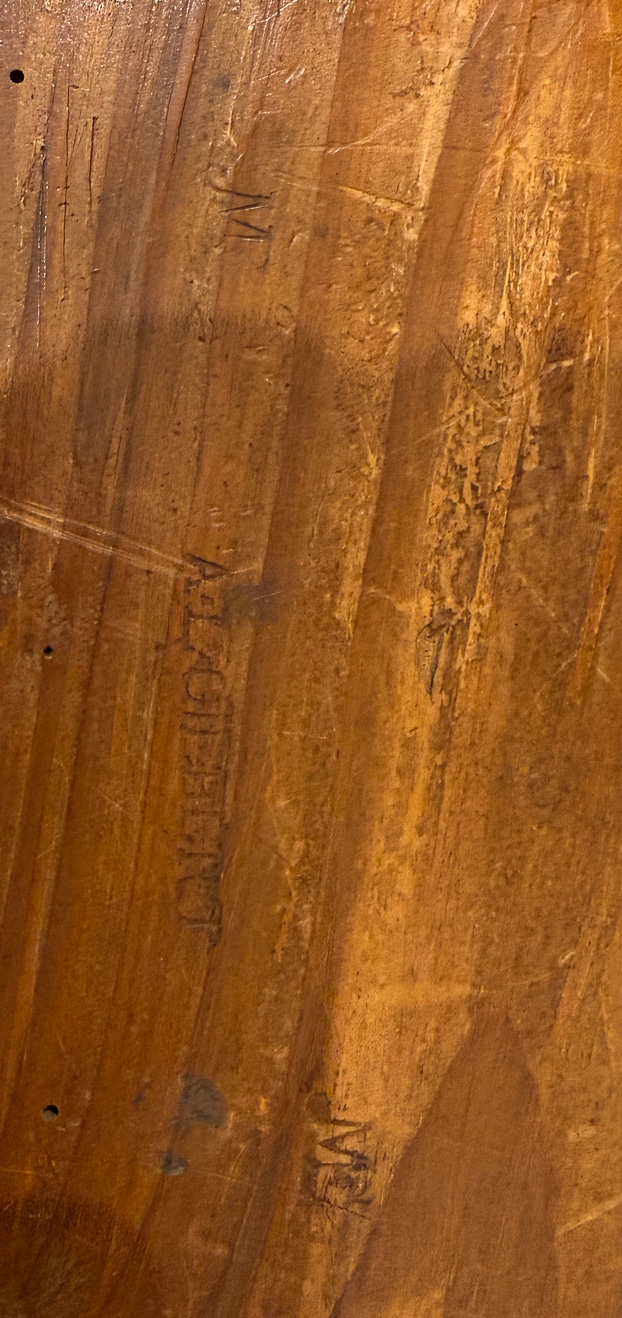
Estampillée à deux reprises sous le plateau A.L Gilbert, cette pièce porte également plusieurs poinçons de la Jurande des Menuisiers-Ébénistes Parisiens (JME), garantie d’authenticité et de qualité.
Origine et datation :
Réalisée vers 1775, cette table illustre le style Transition entre Louis XV et Louis XVI (1750–1776). Son élégance et sa précision reflètent le savoir-faire parisien de l’époque, tout en témoignant du talent d’André-Louis Gilbert, maître ébéniste dont les créations allient tradition et innovation.
Provenance :
Collection de la Comtesse Diane de Castellane.
Dimensions :
Hauteur : 78,5 cm (31 in.)
Longueur : 90,5 cm (35 ¾ in.)
Profondeur : 44,5 cm (17 ½ in.)
État :
Ce meuble est présenté dans son état d’usage, conservant toute son authenticité et son charme d’origine.
Biographie :
André-Louis Gilbert (1746–1809) : un maître ébéniste entre tradition et Révolution.
Né à Paris en 1746, André-Louis Gilbert s’impose comme l’une des figures marquantes de l’ébénisterie française du XVIIIe siècle. Formé dès son jeune âge dans l’atelier de Noël Malle, il se distingue rapidement par son talent, bien qu’un incident de jeunesse l’oblige à s’engager brièvement dans la garde du guet pour échapper à la prison. Cet épisode ne freine cependant pas son ascension : reçu maître en 1774, il installe son propre atelier rue Traversière, avant de s’établir en 1785 dans le faubourg Saint-Antoine, alors cœur battant de l’artisanat parisien.
Gilbert se spécialise dans la création de meubles de style Louis XV, Transition et Louis XVI, caractérisés par une marqueterie raffinée représentant des paysages, des ruines antiques, des colonnades ou des motifs architecturaux, souvent rehaussés d’incrustations de nacre. Ses réalisations, notamment ses commodes et secrétaires, se distinguent par leur élégance et leur originalité, encadrées de bois d’amarante et ornées de bronzes ciselés. Bien que les personnages y soient rares, ses compositions témoignent d’un sens aigu du détail et d’une grande maîtrise technique.
La Révolution française marque un tournant dans sa carrière. Engagé dans les rangs des révolutionnaires, il participe à la prise de la Bastille en 1789, un engagement qui le conduit à interrompre temporairement son activité d’ébéniste. Après cette période tumultueuse, il reprend du service dans la gendarmerie, puis dans la légion de police, avant de se retirer progressivement de l’ébénisterie.
Les œuvres d’André-Louis Gilbert, aujourd’hui recherchées pour leur qualité et leur rareté, illustrent le passage du style rocaille à l’esthétique néo-classique. Ses meubles, souvent estampillés de son nom, se trouvent dans des collections privées et publiques, perpétuant ainsi l’héritage d’un artisan qui a su allier savoir-faire traditionnel et innovation stylistique.
—
André-Louis Gilbert (1746–1809) – A Fine Curved Writing Table with Hunting Marquetry, c. 1775
An exceptional curved writing table, its top framed by a gilt-bronze molding and adorned with hunting trophy marquetry of precious woods: cherry, amaranth inlays, and stained boxwood on a sycamore ground. The apron, decorated with a foliate garland of stained boxwood and sycamore on an amaranth ground, features three drawers—one of which serves as a writing compartment lined with gilt-tooled leather. The table stands on pierced supports terminating in scroll feet, joined by a stretcher. The finely cast gilt-bronze mounts complete this distinguished piece.
Stamped twice beneath the top A.L Gilbert, this table also bears multiple marks of the Parisian Guild of Cabinetmakers (JME), ensuring its authenticity and quality.
Origin and Dating:
Crafted circa 1775, this table exemplifies the Transition style between Louis XV and Louis XVI (1750–1776). Its elegance and precision reflect the Parisian craftsmanship of the period, showcasing the talent of André-Louis Gilbert, a master cabinetmaker whose work blends tradition with innovation.
Provenance:
From the collection of Comtesse Diane de Castellane.
Dimensions:
Height: 30⅞ in. (78.5 cm)
Width: 35⅝ in. (90.5 cm)
Depth: 17½ in. (44.5 cm)
Condition:
Presented in fine condition of use, retaining all its authenticity and charm.
Biography:
André-Louis Gilbert (1746–1809) – A Master Cabinetmaker Between Tradition and Revolution.
Born in Paris in 1746, André-Louis Gilbert emerged as one of the most prominent figures in 18th-century French cabinetmaking. Trained in the workshop of Noël Malle, he quickly distinguished himself, though a youthful indiscretion briefly forced him into the night watch to avoid prison. Undeterred, he was granted master status in 1774 and established his own workshop on Rue Traversière before relocating to the Faubourg Saint-Antoine, the vibrant heart of Parisian craftsmanship.
Gilbert specialized in creating furniture in the Louis XV, Transition, and Louis XVI styles, renowned for their refined marquetry depicting landscapes, ancient ruins, colonnades, and architectural motifs, often enhanced with mother-of-pearl inlays. His commodes and desks, framed in amaranth and adorned with chased bronzes, are celebrated for their elegance and originality. Though rarely featuring figures, his compositions reveal a keen eye for detail and technical mastery.
The French Revolution marked a turning point in his career. Joining the revolutionary ranks, he participated in the storming of the Bastille in 1789, which led him to temporarily abandon cabinetmaking. After this tumultuous period, he served in the gendarmerie and later the police legion before gradually retiring from the trade.
Today, André-Louis Gilbert’s works are prized for their quality and rarity, embodying the transition from Rococo to Neoclassical aesthetics. His stamped furniture, found in private and public collections, preserves the legacy of a craftsman who harmonized traditional skill with stylistic innovation.
| Siècle | 18ème Siècle |
|---|---|
| Style | Transition |
| Type d'Objet | Antiquités |